All Right! You're Ready!
Submit your info down below and we'll get in contact - ASAP!
Save with Our New Client Package


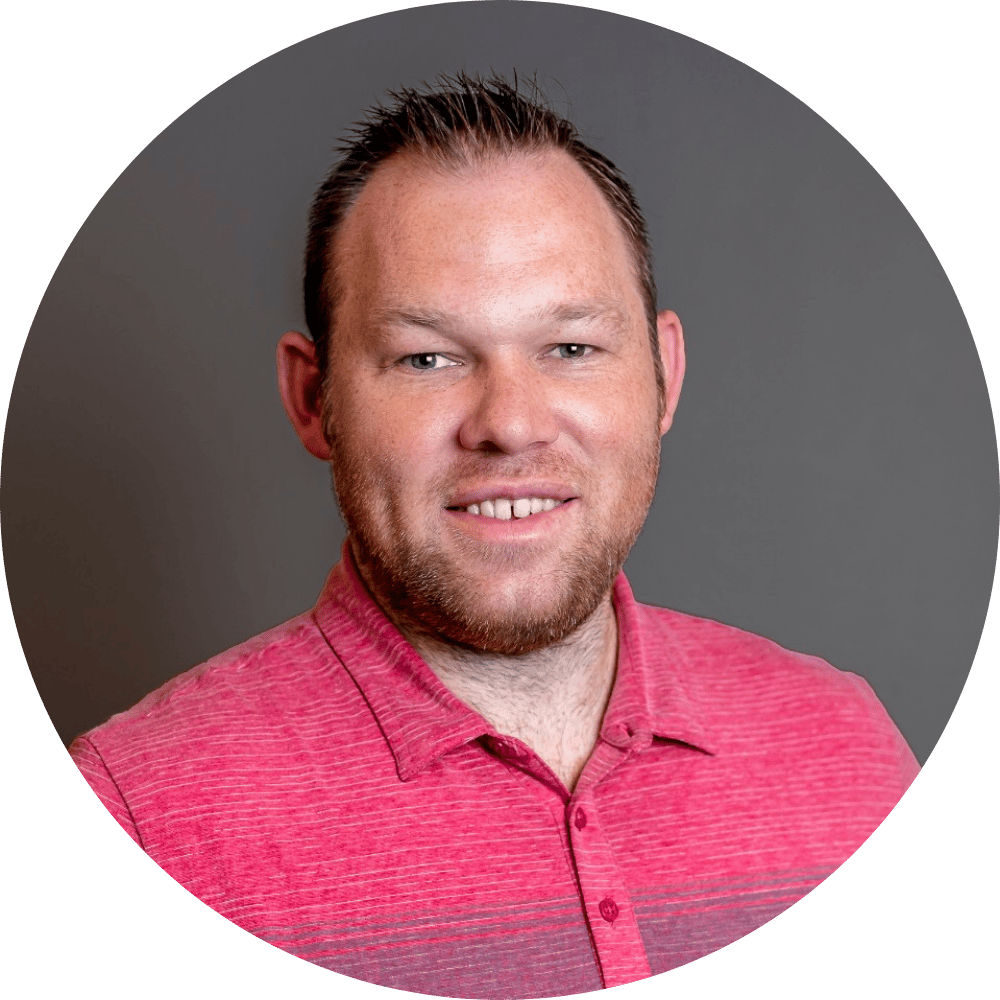
Jason Alston
Myopractor & Founder of Natural Motion
I've been practicing Myopractics since 2013, but my interest in this work started years before I ever imagined doing it professionally.
Today, my focus is pretty simple: help people move better, feel better, and get back to doing the things they love.
Over the years, I've continued expanding my skills through Myopractics and additional forms of hands-on bodywork. But just as important as the techniques I've learned is the experience that comes from working with thousands of different bodies and discovering just how differently each person can respond.
I currently see clients at our Mesa and Queen Creek locations.
Before I Became a Myopractor
My family was introduced to Myopractic when I was a teenager. At the time, I couldn't have explained the philosophy behind it. We just knew that when we went to a Myopractor, we found we got better results than we had experienced with chiropractic. Most of my experiences weren't particularly dramatic. My back would hurt a bit, I'd go in, and I'd feel better afterward.
But one experience really got my attention. As a teenager, I injured my knee enough that the pain was waking me up at night and I couldn't put any weight on that leg. I went to a doctor, and thankfully we determined that nothing appeared to be broken or torn. The plan at that point was to put my leg in a straight-leg brace, completely immobilize the knee, and give it time.
Once I knew there wasn't a fracture or tear, I decided to see our Myopractor. He did a few things that honestly didn't seem particularly dramatic. But I walked out with no pain, it was amazing! At his recommendation, I wore a simple brace for a week that gave my knee support while still allowing it to move. And the problem never came back.
That experience stuck with me. I didn't yet understand why Myopractic could make such a difference. I only knew that it did.
Today, I understand much more about the emphasis Myopractic places on mobility, addressing the body as a whole, and beginning with the pelvis as the foundation of that movement.
To learn more about why the pelvis plays such an important role in whole-body movement, Read: The Sacrum — The Keystone of Your Body →
Finding My Path Into Bodywork
For a long time growing up, I really didn't know what I wanted to do professionally. Eventually, I determined I wanted to do something in healthcare. I've always had a natural ability to listen to people, understand where they're coming from, and connect with them, and I wanted to find a career where I could put that to good use.
One possibility was physical therapy. To find out whether it was the right path for me, I spent about four years working as a physical therapy technician. It was a great experience, and I developed a tremendous amount of respect for physical therapy. It's still something I recommend. But eventually, I realized becoming a physical therapist wasn't the long-term path I wanted.
I also seriously considered becoming an osteopathic physician. Even after becoming a Myopractor, there was a period when I strongly considered continuing on to medical school. Interestingly, through all of those possibilities, Myopractic was already part of the picture. I thought perhaps I'd become a physical therapist and a Myopractor, or a doctor and a Myopractor.
Eventually, I realized something:
The kind of practice I wanted was the practice I already had.
I didn't need to become everything. Doctors can be great at being doctors. Physical therapists can be great at physical therapy.
I wanted to become the best hands-on bodyworker I could possibly be. I wanted to specialize in understanding movement, finding restrictions, restoring mobility, and helping people get back to living their lives without their bodies constantly getting in the way. Once I understood that, the path became pretty clear.

Becoming a Myopractor
I received my Myopractic certification in January 2013, and I've been practicing ever since. But certification was really just the beginning. One of the things I love about bodywork is that there's always another layer to learn, and over the years I've continued pursuing additional training that complements the way I already approach the body.
After becoming a Myopractor, I also completed Massage Therapy training and became a licensed massage therapist. I've since chosen not to maintain that license, and I don't offer traditional massage therapy. But the hands-on skills I learned through that training have stayed with me and continue to enhance the work I do every day as a Myopractor.
I've also trained in Ki-Hara Resistance Stretching, an eccentric-based approach to improving flexibility, strength, and control through movement, as well as kinesiology taping, which I use when appropriate to provide additional support and help with things like movement, stability, and inflammation. I've trained extensively with the Barral Institute in Visceral Manipulation and Neural Manipulation as well. Both fit extremely well with Myopractic because they expand the ways I can evaluate and work with restrictions throughout the body.
And, of course, more than a decade of treating people has been an education of its own. There are things I recognize and feel today that I simply couldn't have recognized when I was a new practitioner—not because somebody finally gave me a secret technique, but because experience teaches your hands. Each tool I've added gives me another way of looking at the person in front of me.
But the philosophy underneath it hasn't changed:
Find what's not moving well. Help restore movement. Then give the body an opportunity to respond.
How I Approach the Body
One of the biggest lessons I've learned is that where someone feels the problem isn't necessarily where the problem started. Someone may come in because their knee hurts, but what's happening through the foot, hip, or pelvis may be influencing the way that knee is moving. Someone's shoulder may hurt, but the neck, ribs, spine, or pelvis may be part of the larger pattern.
That's why I don't want to simply chase symptoms. In Myopractic, we begin with the hips and pelvis and work through the entire body, looking for areas where movement is restricted. From there, I use the techniques that make the most sense for what I'm finding and for the person I'm working with. Sometimes that's Myopractic. Sometimes another technique I've learned fits naturally into the session.
I'm not trying to force your body through a predetermined routine. I'm trying to understand what your body needs that day and help it move better. That's also why two people who walk in complaining about the exact same symptom may receive very different treatments. Their bodies aren't the same.
Experience, Intuition & Faith
After more than a decade of practicing Myopractic and working with the body, my experience gives me a pretty clear idea of what I want to do in most situations. I've seen a lot of people with back pain. I've worked with a lot of headaches, sciatica, shoulder problems, knee pain, and other common complaints. A client may be experiencing a new problem—or something that keeps coming back—and not really know what's contributing to it or what to do about it. After years of doing this work, I can often recognize a familiar pattern and have a pretty good idea of where to start.
But experience doesn't mean every situation is straightforward.
Sometimes someone presents with something unusual. Sometimes I've addressed the obvious restrictions and there's still another piece of the puzzle I'm looking for. One of the ideas passed down through the teachings of Dr. William J. Huls, whose work eventually developed into Myopractic, was the importance of paying attention to that first impression that comes to mind when the intellectual answer isn't immediately obvious.
I've experienced that countless times in my practice. There have been moments when a thought has come to me about an area I should check or something I should do that wasn't necessarily the obvious next step.
I know those impressions are inspiration from God through the Holy Spirit.
When I get out of my own way and follow those impressions I have watched countless clients respond far better than they would've otherwise. Those experiences are humbling. They remind me that while I'm the practitioner doing the work, the human body is doing something far more remarkable than anything I'm doing to it.
Read: The Life and Legacy of Dr. William J. Huls →
Our Bodies Are Amazing!
I remember something from the very first anatomy class I ever took. My instructor talked about how incredibly complex the human body is—how many things are happening simultaneously and how seemingly small changes have the potential to cause chaos in the body. But despite all that complexity, most of the time the body keeps everything working remarkably well.
It adapts.
It compensates.
It regulates.
It responds.
All of this simply witnesses to me that there has to be a God. Because how else could something so remarkably complex, yet in some ways so simple, operate so well?
And here's the interesting thing about experience: The more I learn, the more I realize how much I don't know. I can finish a training excited about everything I just learned—and simultaneously walk away realizing the next ten classes I now want to take.
I've been fortunate to help many people over the years, and I'm confident in the work I do. But I never want success to convince me that I've somehow finished learning. There will always be another technique to study, another perspective to consider, another difficult case that makes me think differently, and another practitioner I can learn from.
I intend to keep getting better for as long as I'm practicing.
Growing Natural Motion
For years, Natural Motion was just me. There's something great about that. I knew every client. I did every treatment. I was responsible for every aspect of the experience. But there's also an obvious limitation: One person can only help so many people.
Today, Natural Motion is growing beyond me, and I'm incredibly selective about the practitioners who become part of this team. The practitioners who work at Natural Motion are people I trust. They're excellent at what they do and committed to continually getting better, but just as importantly, they're people of excellent character who genuinely care about the people they work with.
I also take an active role in their continued development. Anyone who joins my team is an excellent practitioner to begin with, but that's not where it stops. I continually pour what I've learned through more than a decade of working with clients to help them advance their skills—working with them, sharing what I've learned, and helping them continue developing their skills.
My goal is for every practitioner at Natural Motion to be among the very best at what we do.
And when I tell you I trust the people on my team, I mean it. They've worked on me personally. I know how they treat, I know the quality of their work, and they have my personal stamp of approval. In fact, when I'm available to treat someone in my own family, I have no hesitation sending them to one of the practitioners on my team.
That's the standard I'm building Natural Motion around: excellent practitioners you can confidently trust.
Outside the Treatment Room
I'm an Arizona native, born and raised in Mesa.
Outside of Natural Motion, most of my time revolves around my family and the things I enjoy doing. I love being outdoors—hiking, camping, traveling, and working in my yard. There's something satisfying and therapeutic about being in the outdoors.
I'm also a big fan of games, specifically board games and card games, especially when there's some strategy involved. I like having to think a few moves ahead. But the social side is definitely part of the appeal as well. Given the choice, I'm usually happiest sitting around a table playing a game with family or friends or doing something in the outdoors.

More About Where I Came From
Faith, family, service, and hard work have been part of my life for as long as I can remember. I grew up actively involved in the youth programs of The Church of Jesus Christ of Latter-day Saints, as well as Boy Scouts, and earned the rank of Eagle Scout at 14. At 19, I left Arizona for two years to serve as a missionary in Portland, Oregon.
Music was also a big part of my childhood. I played violin through grade school, sang in choirs, and performed in musical theater through elementary school, junior high, and high school.
But probably one of the greatest influences on the person I've become was my dad. Growing up, I spent a lot of time working alongside him. He taught me a great deal about hard work, but more importantly, he was an incredible example to me and ultimately became my best friend. My dad passed away a couple of years ago, and a tremendous amount of who I am today I owe to his example.
My son was only six when my dad passed away, so unfortunately, he never really had the opportunity to know his grandpa the way I wish he could have. But I hope I can pass along to my son many of the same things my dad gave me—the value of hard work, faith in God, loving your family, doing good, and being the kind of person others can count on. More than anything, I want to give my son the same kind of love, time, and example that my dad gave me.
When I look back, a lot of the things I grew up doing have shaped me in ways I probably didn't recognize at the time.
Working alongside my dad taught me to work.
Music taught me to practice.
Scouting taught me responsibility.
Missionary service taught me to listen to and connect with people whose lives could be very different from mine.
Faith in Jesus Christ and family continue to shape the way I try to live, the kind of husband and father I want to be, and the kind of person I want to be.
New Client 3-Visit Package
Includes your Initial Evaluation & Treatment, plus 2 additional Standard Myopractic sessions.
Often people notice a real difference after just one session, but lasting results typically take some consistency up front. By the end of your third session, you'll likely have a much clearer picture of how your body is responding, and we'll be able to give you better guidance on what you may—or may not—need beyond that point.
Package credits can be used at either of our offices.
Already a client? View Returning Client Packages →
I currently see clients at both our Mesa and Queen Creek locations, and I'd love for you to come experience Myopractic for yourself. Choose the location that's most convenient for you below to get scheduled.
Choose A Location
Arizona
STILL HAVE QUESTIONS? WE'VE GOT YOU!
Frequently Asked Questions
What training does Jason Alston have?
Jason received his Myopractic certification in January 2013 and has been practicing ever since. Since then he has continued adding training that complements Myopractic. That includes Visceral Manipulation and Neural Manipulation with the Barral Institute, Ki-Hara Resistance Stretching and kinesiology taping. He also completed Massage Therapy training and became a licensed massage therapist, but he has chosen not to maintain that license and doesn't offer traditional massage. The hands-on skills from that training still inform his work.
How did Jason get into Myopractic?
Jason's family was introduced to Myopractic when he was a teenager, and they felt they got better results than they had experienced with chiropractic. One experience stood out. After a knee injury left him in extreme pain, he went in to see his doctor, and fortunately, the doctor confirmed that nothing was broken or torn. Knowing that, his family felt comfortable seeing what a Myopractor could do. After just a few simple techniques to get things moving better, he walked out with no pain, just some mild sensitivity. He wore a simple support brace for about a week and hasn't had a problem with that knee since. That experience, among others, helped him see the value of Myopractic firsthand in his own body. Everyone's experience is different, and results vary from person to person.
Why did Jason choose Myopractic instead of becoming a physical therapist or doctor?
For a long time, Jason wasn't sure what he wanted to do professionally, but he knew it would be in healthcare. He'd had great experiences with Myopractic, so that was on the list, along with physical therapy and becoming a doctor. He even thought about combining Myopractic with one of those paths, since the skills would complement each other. Along the way, he took a job as a physical therapy technician and enjoyed the field. He still recommends physical therapy to clients, but decided it wasn't his path. Even after becoming a Myopractor, he considered becoming an osteopathic physician. In the end, he realized what he wanted most was to give his clients the best-quality hands-on bodywork possible, so he has dedicated his focus to that and trusts doctors, physical therapists and other practitioners to be great at what they do.
How does Jason approach the body?
He simply walks up to it... 😄
Jason believes that where you feel a problem isn't necessarily where it started, so he doesn't simply chase symptoms. In Myopractic he begins with the hips and pelvis and works through the whole body. He follows a consistent evaluation every session to find areas where movement is restricted, then works on what he finds, using the techniques that make the most sense for that person. That's why two people with the same symptom may receive different care.
What role do experience and faith play in Jason's work?
After more than a decade of practice, Jason can often recognize familiar patterns and has a good idea of where to start. When a situation isn't straightforward, he pays attention to first impressions, an idea passed down through the teachings of Dr. William J. Huls, whose work developed into Myopractic. Jason shares that he sees those impressions as inspiration from God through the Holy Spirit. He also says his faith in Jesus Christ and his family shape how he tries to live and work. He adds that the more he learns, the more he realizes how much there is to learn, and he intends to keep getting better.
Explore

Contact
Natural Motion Myopractics
Mesa: 4447 E. Broadway Rd. Ste. 108, Mesa, AZ 85206
Queen Creek: 22707 S. Ellsworth Rd. H-104, Queen Creek, AZ 85142
Phone: 480-712-2555