

Hydration Isn't Just About Water: Here's What Most People Miss
Jason Alston
Deep down, we all know how important it is to drink plenty of liquids.
It's one of those things we've heard a thousand times—and for good reason.
But not all liquids are created equal—and deep down, most of us already know that soda or alcohol aren't doing any favors when it comes to hydration.
That said, even if you're drinking lots of water, it still might not be enough.
Because hydration isn't just about volume—it's also about giving your body what it needs to function well.
Let's talk through some practical, real-world strategies that can help you feel more energized, think more clearly, and hopefully reduce the frequency of things like headaches or muscle cramps.
And if you care about staying active, mobile, and flexible as you age—hydration plays a bigger role than most people realize.
Let's break it down.
How Much Water Should You Actually Drink?
You've probably heard the general guideline:
Drink half your body weight in ounces each day.
So if you weigh 200 pounds, then you'll want to drink about 100 ounces of water each day.
This isn't a hard medical rule, but it's a solid starting point.
If you're hitting that number, you're likely right on track to being well-hydrated.
But keep in mind, you'll need more water if you're:
- Working a physical job
- Spending time in hot weather—especially if you live where it gets hot like it does here in Arizona
- Exercising, hiking, or playing sports
Staying hydrated in these situations is even more critical because your body loses fluids faster through sweat, and without enough water, performance and recovery can both take a hit.
Why Water Alone Might Not Be Enough
Drinking enough water is still the foundation, and for many people, water alone may be all they need.
But if you're already drinking plenty of water and can still tell that you're not getting enough, that's where electrolytes can become especially helpful.
Your body also relies on minerals like sodium, potassium, and magnesium, particularly when you're sweating heavily through exercise, physical work, or spending time in the heat.
These minerals play important roles in muscle function, fluid balance, and overall energy levels. If they're out of balance, you might still feel tired, foggy, or experience muscle cramps even though you're drinking a lot of water.
And when hydration is off, it can affect more than just energy—it can influence how your joints move and how flexible your body feels.
Staying hydrated helps keep your body in motion.
What Works for Me
Personally, I use trace minerals most days.
Especially when I'm:
- Doing yardwork
- Hiking—especially my bigger hikes like the Grand Canyon
- Spending time in the heat
I've found that trace minerals work better for me than sports drinks like Gatorade—especially for daily use.
I'll show you the specific trace mineral products I use and how I use them a little later in this article.
In fact, when I was 21, I spent a summer doing door-to-door sales in Austin, Texas. Hot and humid! I went at least a week or two drinking Gatorade as my primary beverage, and it actually made me sick.
Nothing crazy, but enough to make it obvious that my body didn't appreciate it.
Back to trace minerals—they actually enhance the flavor of water, in my opinion. Which helps if you're someone who doesn't love plain water.
If you try trace minerals and you still can't take the plainness of water's flavor, consider adding something to make your water more appealing:
- A sugar-free flavor packet, used mindfully
- A squeeze of lemon or lime
- Unsweetened herbal tea
But if I had to recommend one thing?
Trace minerals win.
What I Personally Use to Stay Hydrated
Over the years, I've tested a lot of hydration products—especially during hotter months and while training and doing big hikes like the Grand Canyon.
One of the first products I liked was Liquid I.V.
It gave me a noticeable boost on active days.
But eventually, I started looking for something without sugar and with ingredients I personally preferred.
That led me to try LMNT, which had a better nutrient profile for what I was looking for.
I actually like LMNT's electrolyte profile, and I'm inclined to believe they're using clean, good-quality ingredients. My hesitation is simply that some of their products list “natural flavors,” and that's an ingredient I personally prefer to avoid when I can.
That's not me saying that every product containing natural flavors is bad. It's simply a broad labeling term, and I prefer knowing more specifically what's in what I'm consuming.
So I kept looking.
Eventually, I found a few tools that have worked really well for me in both everyday life and more intense activities like hiking or long outdoor workdays.
For Daily Use
Trace Minerals 40,000 Volts
This is my go-to for regular, daily hydration.
It's a balanced blend of electrolytes that I add to the water I'm already drinking.
How to Use:
Start small—just 1 or 2 drops in a glass or bottle of water.
Slowly work up over time as your body adapts. Many people eventually use around ½ teaspoon (40 drops) per 16–20 ounces of water.
Stir or shake to mix.
What I Do Personally:
I'm used to it now, so I'll usually add a full serving to my water bottle in the morning and drink it on my way to work.
At work, I often fill a gallon jug with water, add some 40,000 Volts, and drink it throughout the day as needed.
This is based on my personal experience. Start small and pay attention to how your body responds.
For Hiking, Sports, and Extended Time in the Heat
Trace Minerals Endure
When I'm doing something more physically demanding—like hiking, yardwork, or spending long days outdoors—I turn to Endure.
It's a more concentrated electrolyte formula designed for higher-output activities.
How to Use:
Start with just a few drops per bottle if you're new to it.
A full dose is usually around ½ teaspoon (40 drops) per 16–20 ounces of water.
Shake or stir to mix.
What I Do Personally:
On big hikes, I add Endure directly to the hydration bladder in my backpack.
That way, every sip I take already has electrolytes in it.
I don't have to think about it while I'm on the move.
If you're trying it for the first time, start slow and test it during lower-intensity activities before using it on longer, more demanding days.
For Better-Tasting Water
True Lemon Water Enhancer
If you don't love the taste of plain water, this is a simple way to add some flavor.
It's made from crystallized lemon and doesn't contain preservatives, artificial sweeteners, or the “natural flavors” I personally prefer to avoid when I can.
How to Use:
Add one packet to a 16–20 ounce water bottle and stir or shake.
You can use it by itself or combine it with trace minerals if you'd like.
Bonus Tip:
Freeze fresh lemon juice into ice cubes when lemons are in season.
Drop one into your water each day for a fresh flavor boost—no packets needed.
For Extra Support During High-Endurance Activities
SaltStick FASTCHEWS
Before I discovered Endure, these were my go-to.
They're chewable electrolyte tablets that are easy to carry, which makes them particularly convenient during longer activities.
I still recommend them—especially for anyone who prefers a chewable option.
How to Use:
I typically take 1–2 tablets every 30–60 minutes during prolonged activity, depending on how much I'm sweating and how demanding the activity is.
I always pair them with water.
What I Do Personally:
I don't use these every day.
But on really high-endurance days—long hikes or full days in the sun—I may pair FASTCHEWS with Endure for an extra hydration boost.
As with anything new, I'd test them on a lower-intensity day first and see how your body responds.
How to Work Toward Your Water Goal
If you're not drinking much water now, don't try to go from 0 to 100 overnight.
Start small.
Here's a quick reference:
- 1 glass of water = about 8 oz
- 1 standard water bottle = about 16.9 oz
So if you're drinking three bottles a day, try working up to four...then five.
One of the easiest habits to build is to drink a glass of water first thing in the morning.
It helps rehydrate your body after sleep and gets you started toward your water goal early in the day.
Sometimes it can help to have a water bottle right on your bedside table ready for you when you wake up.
But find what works for you.
What Happens When You're Hydrated?
You might notice:
- More energy
- Better skin
- Fewer headaches
- Improved joint and muscle function
- Better digestion and focus
It's not magic—it's just your body working the way it's supposed to.
And when your body's working well, you move better.
Hydration supports flexibility, recovery, and the freedom to stay active.
Whether you're chasing your kids, hiking a trail, or just trying to stay mobile as you age—hydration is foundational.
Got a Headache?
Try this:
Drink a glass or two of water—quickly but comfortably.
It won't fix every headache, but if dehydration is contributing to it, it's a simple move that might help more than you think.
What About Coffee, Tea, and Other Drinks?
In my opinion, coffee and tea count towards hydration.
They're mostly water, and even though caffeinated versions can have a mild diuretic effect, they still contribute toward your overall hydration. So if you have a cup of coffee or tea, I'm perfectly comfortable counting that toward your daily hydration goal.
Milk, juice, and soda are a little different.
Yes, they contain water and contribute fluid to your body. But in my book, I wouldn't count them toward your daily hydration goal. I'd consider whatever hydration you're getting from them a bonus and still work toward your daily hydration goal with water as your primary source.
Alcohol is different.
Alcohol can contribute to dehydration, so I definitely wouldn't count that toward your hydration goal. If you're drinking alcohol, make sure you're getting some additional water in addition to it.
A Simple 1-to-1 Tip
For every alcoholic drink, try having a glass of water too.
It's not a strict rule, but it's a simple way to help offset some of the additional fluid loss and stay on top of your hydration.
Final Thoughts
Hydration doesn't have to be complicated.
Listen to your body.
Make small, realistic changes.
Everyone's body and health are different, and these are simply strategies and products that have worked well for me. Start small, pay attention to how your body responds, and if you have specific health concerns, medical conditions, or take medications that can affect fluid or electrolyte balance, talk with your healthcare provider about what's appropriate for you.
But for most of us?
A little more water, a little more intention, and maybe a few trace minerals can go a long way.
Stay hydrated out there.
Affiliate Disclosure:
As an Amazon Associate, I earn from qualifying purchases.
If you click through and buy something, I may receive a small commission at no additional cost to you.
I only recommend products I've personally used and trust.

Join the Life Is Motion Newsletter for practical ideas to help you better understand your body, move better, build healthier habits, and become the healthiest version of yourself.

What Is Myopractic?
Myopractic is a whole-body approach to helping restore healthy movement. Rather than focusing only on where you feel the problem, we look at how your body is moving as a whole.
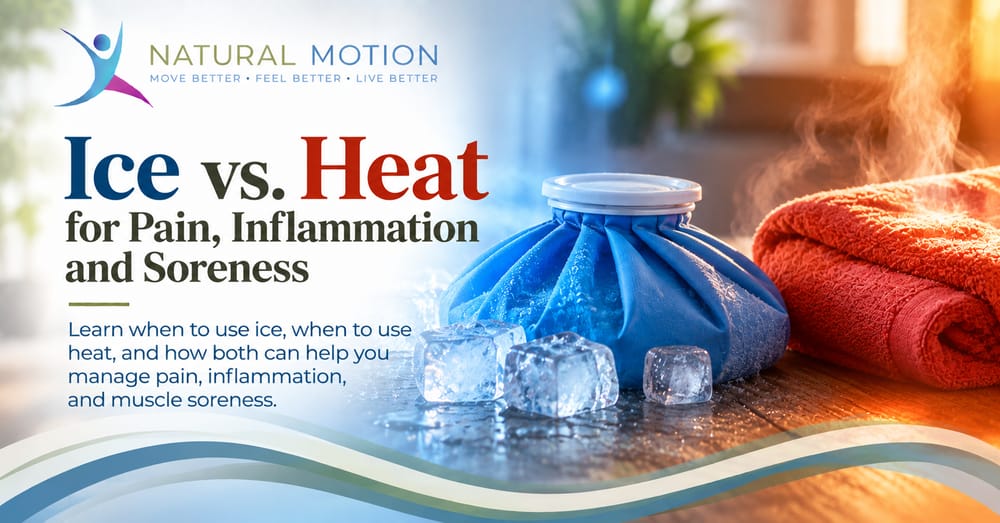
Should you use ice or heat when something hurts? Learn when cold may help with pain and swelling, when heat may help with stiffness and tension, and how to use both safely.

Shoulder pain doesn't always begin with the shoulder. Learn how movement through the neck, rib cage, spine, pelvis, and the rest of your body can influence how your shoulder moves and feels.

Knee pain doesn't always begin with the knee. Learn how movement through the pelvis, hips, feet, and the rest of your body can influence how your knee moves and feels.
Ready to Schedule?
Each Myopractic session begins by getting the hips balanced and moving, followed by a whole-body evaluation and treatment. Rather than just focusing only on where you're experiencing discomfort, Myopractic care looks at how the body is moving as a whole to identify and address areas of restriction. Whether you're dealing with pain, limited mobility, or simply want your body moving and functioning at its best, you can schedule your appointment below.
Choose A Location
Arizona
Explore

Contact
Natural Motion Myopractics
Mesa: 4447 E. Broadway Rd. Ste. 108, Mesa, AZ 85206
Queen Creek: 22707 S. Ellsworth Rd. H-104, Queen Creek, AZ 85142
Phone: 480-712-2555